
Skip to content
Linkedin Facebook Medium X
Pharma Lesson
  • Home
  • Blog
  • Study Materials
  • Courses
Facebook Linkedin Medium X
Pharma Lesson
  • Relationship Between Tmax, Cmax, and Dissolution Time Points in Sustained-Release Products
    Pharmacokinetics

    Relationship Between Tmax, Cmax, and Dissolution Time Points in Sustained-Release Products

    ByPharma Lesson August 16, 2025August 16, 2025 Reading Time: 2 minutes

    In sustained-release (SR) or extended-release (ER) formulations, the relationship between Tmax, Cmax, and dissolution specification time points is critical to ensure the product delivers the drug at a controlled rate, maintaining therapeutic levels over an extended period. Unlike immediate-release formulations where the goal is rapid absorption and a quick Tmax, SR products are designed to…

    Read More Relationship Between Tmax, Cmax, and Dissolution Time Points in Sustained-Release ProductsContinue

  • In Vitro–In Vivo Correlation (IVIVC) for SR Dosage Forms
    Bioequivalence | Dissolution

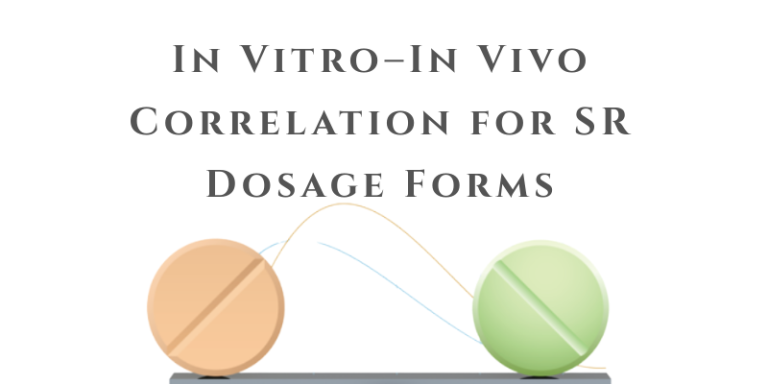
    In Vitro–In Vivo Correlation (IVIVC) for SR Dosage Forms

    ByPharma Lesson August 16, 2025 Reading Time: 2 minutes

    What is IVIVC? BCS and IVIVC Feasibility Types of IVIVC Steps to Develop Level A IVIVC for SR Products Regulatory Validation Criteria If met, the IVIVC model can support biowaivers and post-approval changes without further clinical studies. Best Practices for Dissolution Testing in SR IVIVC Applications of IVIVC in SR Development Common Challenges in SR…

    Read More In Vitro–In Vivo Correlation (IVIVC) for SR Dosage FormsContinue

  • In Vitro Strategies to Ensure Bioequivalence of Sustained-Release (SR) Formulations
    Bioequivalence

    In Vitro Strategies to Ensure Bioequivalence of Sustained-Release (SR) Formulations

    ByPharma Lesson August 12, 2025August 15, 2025 Reading Time: 2 minutes

    SR formulations are designed to release the drug gradually over an extended period, making their performance highly dependent on variable GI conditions such as pH, motility, and enzymes. Therefore, a single dissolution test is insufficient. 1. MMD Testing SR formulations must release consistently across the GI tract. Dissolution is evaluated at pH 1.2 (stomach), pH…

    Read More In Vitro Strategies to Ensure Bioequivalence of Sustained-Release (SR) FormulationsContinue

  • In Vitro Tests Other Than Dissolution for Bioequivalence Assessment
    Bioequivalence

    In Vitro Tests Other Than Dissolution for Bioequivalence Assessment

    ByPharma Lesson August 5, 2025August 5, 2025 Reading Time: 2 minutes

    While dissolution testing is a primary tool for predicting bioequivalence, several other in vitro methods contribute critical insights, especially for BCS Class II/IV drugs or complex formulations. Below is a list 1. Solubility Studies 2. Permeability Assays 3. Precipitation Kinetics and Supersaturation Studies 4. Dynamic Gastrointestinal Simulation Models 5. In Vitro Lipolysis 6. IVIVC 7….

    Read More In Vitro Tests Other Than Dissolution for Bioequivalence AssessmentContinue

  • Stability Study of BE Batch
    Bioequivalence

    Stability Study of BE Batch

    ByPharma Lesson August 5, 2025August 5, 2025 Reading Time: 2 minutes

    A Frequently Overlooked Yet Crucial Step in Generic Drug Development. When a formulation is finalized and development stability data is already generated, teams often wonder: Q: ā€œIf we manufacture a fresh batch for the pivotal bioequivalence (BE) study, do we need to place it on stability again?ā€ Answer: YES. Absolutely. Even if: The pivotal BE…

    Read More Stability Study of BE BatchContinue

  • Viscosity and Bioequivalence of Oral Suspensions
    Bioequivalence | Pharmaceutical Development

    Viscosity and Bioequivalence of Oral Suspensions

    ByPharma Lesson August 1, 2025August 1, 2025 Reading Time: 2 minutes

    Viscosity plays a particularly critical role—especially when the goal is to demonstrate bioequivalence (BE) with a Reference Listed Drug Key functions of viscosity in suspensions: Bioequivalence Considerations BE studies are conducted to ensure that the rate and extent of drug absorption from a generic product are comparable to that of the RLD. For BCS Class…

    Read More Viscosity and Bioequivalence of Oral SuspensionsContinue

Page navigation

Previous PagePrevious 1 2 3 4 … 14 Next PageNext
  • Privacy Policy
  • Contact Us
  • About Us

© 2026 Pharma Lesson | All Rights Reserved.

  • Home
  • Blog
  • Study Materials
  • Courses